Posts

Showing posts with the label Spiritual Disciplines

The Fruit of the Spirit & the Spirit-Filled Life

Image
The Fruit of the Spirit has kind of a VBS-theme vibe going on. That might be why it doesn't come up a lot in adult discipleship. Maybe it's just typecast—"Oh, that's mostly in the Bible so there's safe imagery for children's church. It's not really important for adults. Too cute." But the Fruit's position in Galatians 5 is actually really theologically significant. The Fruit is significant because Paul contrasts it with the acts of the flesh. They're opposites. Gal. 5:19  Now the works of the flesh are obvious: ... Gal. 5:23  But the fruit of the Spirit is: ... It almost sounds like Paul is contrasting two ways of living. In fact, that's exactly what he's doing! Gal. 5:16  But I say, walk by the Spirit and you will not carry out the desires of the flesh. This is one of the big themes in Paul's depiction of the Christian life. You either carry out the desires of the Spirit or you carry out the desires of the flesh. Those desires are ...

Insides & Outsides // Terry Pratchett's Equal Rites

Image
In Terry Pratchett's novel, Equal Rites , there's a scene that illustrates a thread I keep seeing in his writing.  An older woman, a mentor-figure, is trying to teach a young girl how to use magic effectively. One of the things she teaches the girl to do is "borrow" the mind of an animal, like an eagle or bear, to use the animal like a periscope - see what they can see, sense what they can sense.  The older woman warns the girl not to take control of the animal's mind, only to ride alongside it, but the girl ignores her warning. She seizes the mind of an eagle and flies away with a triumphant screech while her human body falls into a coma. But because she doesn't know the limitations of the eagle's body, it gets tired and falls to the earth on a remote mountain. But the older woman tracks the eagle, brings it home and warms it again. Patiently she coaxes the girl's consciousness out of the eagle and back into her human body, and it passes from a coma i...

Consider Jesus, Our Feast

Image
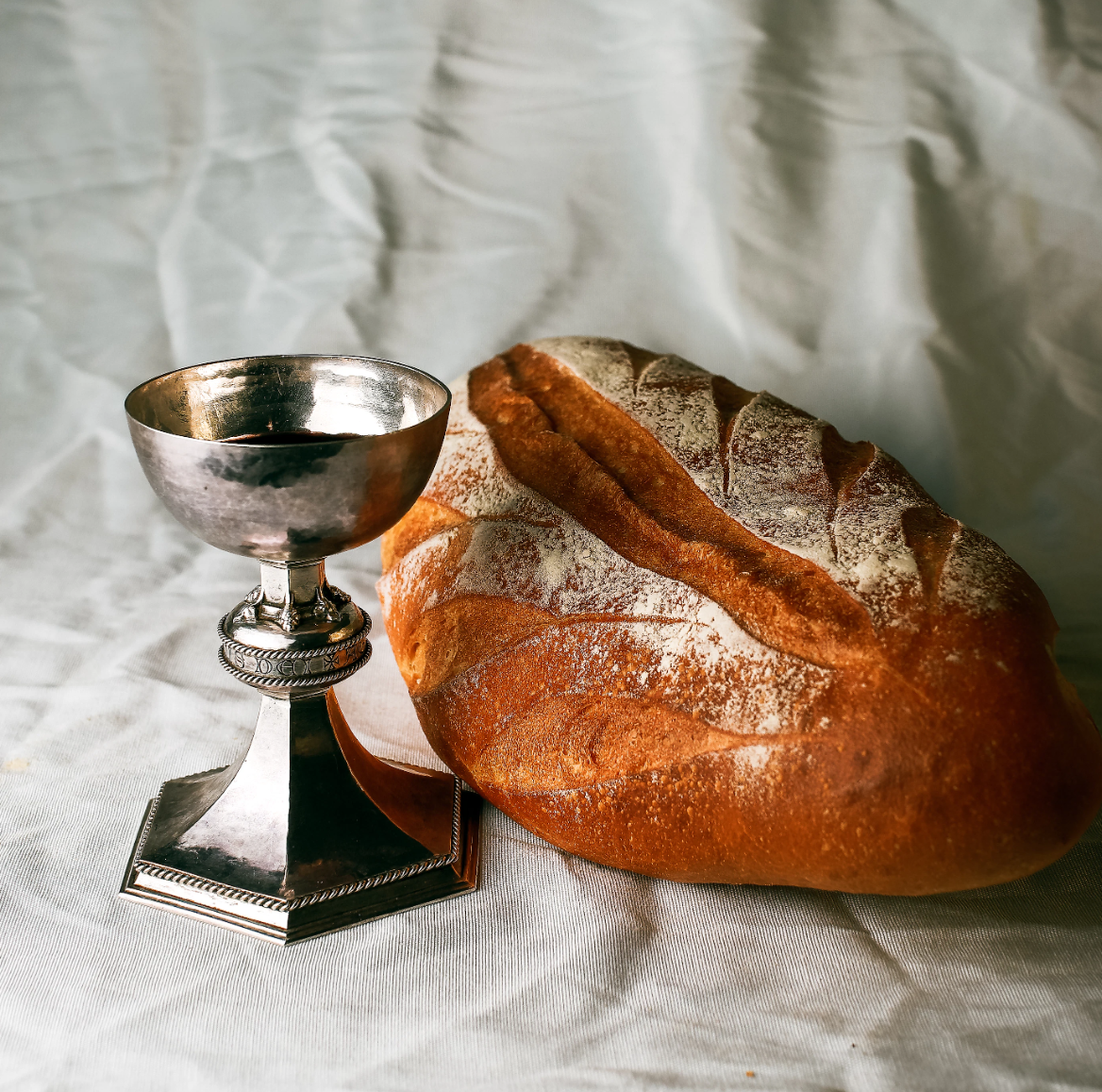
New Year’s Day is just another midwinter day, but it marks the progress of time and prompts us to reflect—maybe on the passing year, maybe on hopes and expectations for the coming year.  In our New Year’s reflections, I think it can be easy for us to partake of a belief that is unhelpful to our souls, but fills the air Americans breathe: we must make something ultimate of the new year .  I’m struggling to find words for the belief I’m trying to describe, but I hope you can feel what I mean. Though most people don’t talk about this belief in these terms, it can feel like a new year impresses on us a burden that could be described as … saving ourselves or producing something profoundly meaningful or  achieving some purity or righteousness,  … especially by means of self-discipline or work. That’s a belief that flows naturally from the American culture’s secular, pluralistic civic religion. It isn’t polite to talk publicly about truth, goodness or beauty, but there stil...

#Simplicity - Part 2

Image
Living simply is not easy. It can be painful at worst and annoying at best to face the way your choices have been determined by values you don’t actually like. Living complexly is easy, in some ways. (Complexly probably isn’t a word, but it sounds like what it is--your tongue has to try to do several things at the same time just to say it--so I think it suits the purpose here.) It takes less effort to avoid conscious decisions than to confront them. Living complexly may be easy, but it can keep your life’s journey from progressing. I’ve ridden some life loops for too long. Maybe you have too. I am less far in my pursuit of my calling than I could be right now because there have been times when I have allowed lesser values to take the wheel. Living simply is not easy. It involves the interruption of habits, paths on which your mind sleepwalks every day. Living complexly is living for some things while saying and maybe even believing that you’re living for other things. Livin...

#Simplicity - Part 1

Image
It’s Instagram doctrine: a simple life is a happy life. Is it true? That depends on your definition of simplicity, I suppose, but I don’t think campfires, guitars, and Edison bulbs are necessary to happiness. This is my definition of “simple life”: A life organized around the values of the one living, excluding what detracts from the pursuit of those values. That is probably the definition someone’s using when they share a cheesy Instagram post with campfires and Edison bulbs, but I think that definition is also worthwhile for Christians to live by. Christians should be known for simple lives--that is, lives organized around their values (Col. 3:17; 1 Cor. 10:31). The thing is, your life already reflects your values, whether or not you consciously chose to prioritize those particular values. In Renovation of the Heart , Dallas Willard insists that what you do actually does reveal your character, and I think he’s right. Right now, you actually are the sort of person who wou...

Solitude - Massi: Hall of Heroes

Image
I have loved Jeri Massi's fiction for a long time. I always looked forward to her short stories in my BJU Press reading curriculum (grades 4-8, if I remember correctly), and when I was introduced to her longer juvenile and YA fiction, I was hooked. From Derwood, Inc. 's fantastic mattress heist to the stern joy of suffering and maturing in  Valkyries  to her profoundly theological (and trippy)  Dr. Who fan fiction , Massi has inspired me and taught me about aspects of the Christian life that I don't remember learning about anywhere else as a child. Like Ted Dekker, Massi is a prophet: her stories preach, hard. Hall of Heroes  was published in 2013. It was originally intended as the seventh and final book in Massi's wonderful Peabody Adventure Series . After a disagreement with the publisher , Massi rewrote the story to stand alone. It's a novel for kids about what it means to take part in Christ's suffering. That's where solitude comes in. In literature,...

Solitude - Lewis: Prince Caspian

Image
I have always disliked  Prince Caspian . It's the second-published book (1951) in the Chronicles of Narnia  by C. S. Lewis. It's a bit of a jumbled slog, taking breaks from the main narrative for a four (4!) chapter flashback, and then breaking off again near the end from the main narrative to catch us up on what's been happening to the characters we haven't seen for three chapters. It's a slow read, too. The early chapters evoke a feeling of listlessness--the four children are pulled from the train depot by magic that really doesn't feel very magical, then wander through woods with hot, heavy feet, not sure where they are or where they're going. They find Cair Paravel, their former castle of splendor, an abandoned ruin. They hear the story of Caspian's failing rebellion. They make a time-consuming false start. The early chapters feel a bit like a Missouri summer day at a hundred percent humidity--it's laborious just to walk. I think Lewis in...

Solitude - Dekker: Beyond the Circle

Image
Beyond the Circle is a two-volume story written by Ted Dekker and published in 2018. The story is set in the same fictional universe as the Circle series ( Black , Red , White , and Green ), along with about ten other Dekker books. If you've read any of the Circle or its spinoffs before, you would find the setting familiar: the bad guys ("the Horde") have distinctive skin and live in the desert, and some characters fall asleep in our world, but they wake up in another one, then when they fall asleep there, they wake up here. You've seen all the story props before. What sets this duology apart from the original Circle series is its theology. Dekker excels at writing theology into his fiction, both through dialogue and just plain story. These books are the primary example, but other examples include  Outlaw ,  Showdown ,  Sinner ,  Heaven's Wager ,  When Heaven Weeps , and  Thunder of Heaven , all of which I recommend. There's lots to say about t...

Solitude - Introduction

This post begins a short series on ways in which a few of my favorite authors use solitude in their fiction. The topic caught my attention partly because of some reading on the spiritual disciplines I did this last year (Richard Foster's Celebration of Discipline  and several of Dallas Willard's books). In this first post, I'll talk a little about my experience and my current understanding of solitude's uses (positive and negative). That will provide a background for where I'm coming from as I comment on uses of solitude in fiction. I have experienced solitude in some positive and some negative ways. Four of the five jobs I have worked have involved extended periods of solitude, whether as a librarian, landscape technician, or secretary. The stretches of solitude occasioned by that work have often been spiritual deserts in which I have faced temptations that wouldn't emerge in the company of others. That probably says something about the value of fellowship,...