Posts

Showing posts with the label Devotionals

Consider Jesus, Our Feast
Image
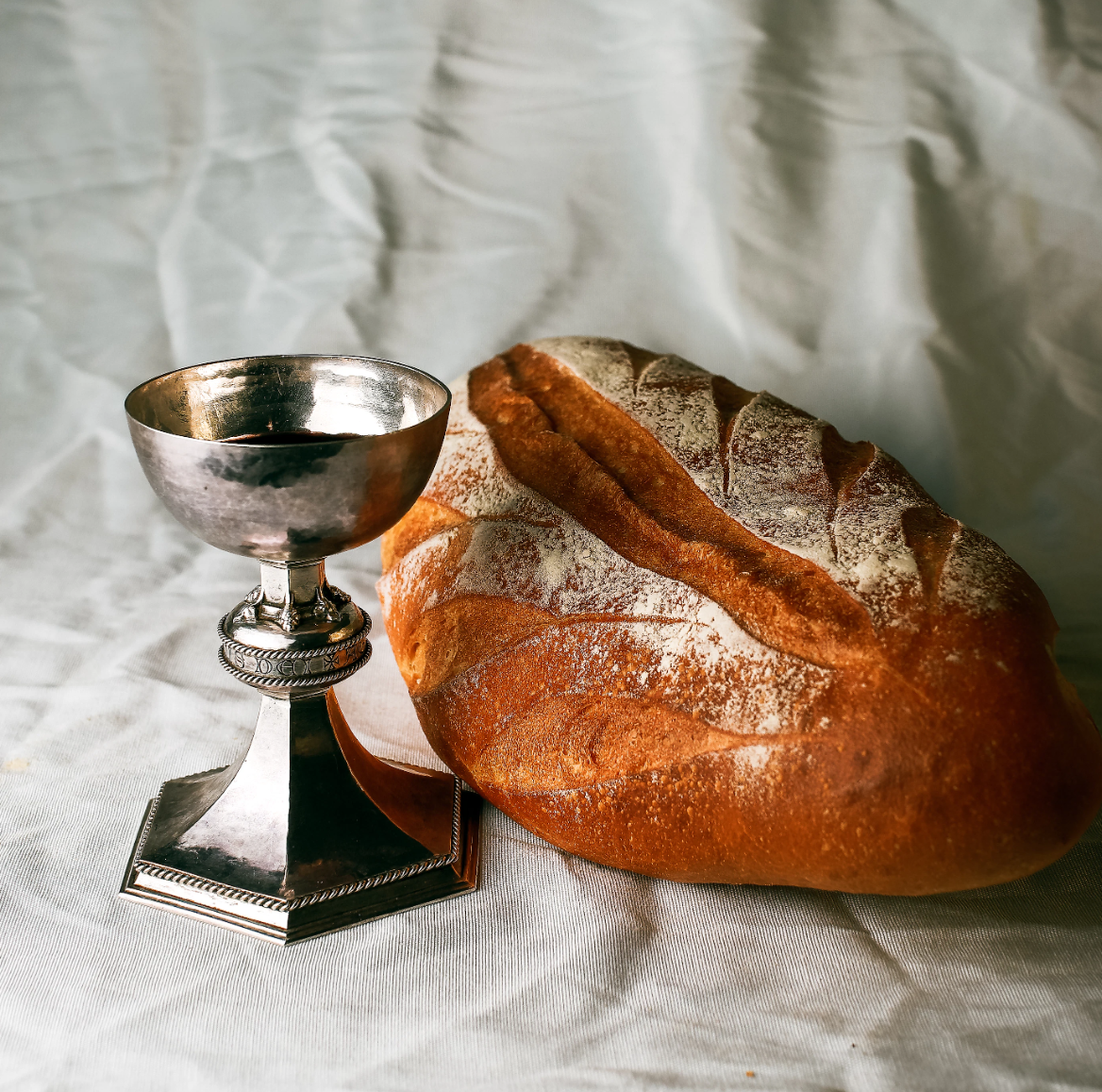
New Year’s Day is just another midwinter day, but it marks the progress of time and prompts us to reflect—maybe on the passing year, maybe on hopes and expectations for the coming year.  In our New Year’s reflections, I think it can be easy for us to partake of a belief that is unhelpful to our souls, but fills the air Americans breathe: we must make something ultimate of the new year .  I’m struggling to find words for the belief I’m trying to describe, but I hope you can feel what I mean. Though most people don’t talk about this belief in these terms, it can feel like a new year impresses on us a burden that could be described as … saving ourselves or producing something profoundly meaningful or  achieving some purity or righteousness,  … especially by means of self-discipline or work. That’s a belief that flows naturally from the American culture’s secular, pluralistic civic religion. It isn’t polite to talk publicly about truth, goodness or beauty, but there stil...

Jesus and the Weeds

Image
Matthew 13:24-30 (NET) He told them another parable:  The kingdom of heaven is like a person who sowed good seed in his field. But while everyone was sleeping, an enemy came and sowed weeds among the wheat and went away. When the plants sprouted and bore grain, then the weeds also appeared.  So the slaves of the owner came and said to him, “Sir, didn’t you sow good seed in your field? Then where did the weeds come from?”  He said, “An enemy has done this.”  So the slaves replied, “Do you want us to go and gather them?”  But he said, “No, since in gathering the weeds you may uproot the wheat with them. Let both grow together until the harvest. At harvest time I will tell the reapers, ‘First collect the weeds and tie them in bundles to be burned, but then gather the wheat into my barn.’” Jesus teaches us that  God didn’t intend for there to be evil people. God plans to remove evil people ultimately.  But God often leaves evil people alive, which is for t...

Choose This Day

Image
Victor Frankl was a Jewish neurologist who lived through the Holocaust. To try to save his family and his life, it looks like he did some unethical experimentation on other Jews for the Nazis, but he and his family were eventually imprisoned anyway. His wife and immediate family all died; he survived alone. Frankl was a neurologist and psychologist, a doctor, and while he was in the concentration camps, he observed the people around him. He wanted to know what psychological factors make the difference between life and death when people are at the very limits of pain and suffering. He wrote a book about his experience and his observations, Man's Search for Meaning . He concluded that no matter how much someone suffered, the difference between life and death was whether someone had a purpose for living. Whether someone was living for the day when they could take revenge on the Nazis or whether someone hoped they could somehow lighten someone else's suffering, having a  wh...

Unanswered

Image
When we think about why God may answer prayer with "wait" or "no," a lot of us hear someone in the background of our minds saying, "Get used to this. God usually doesn't answer prayer." That voice might sound like someone you heard growing up. I think that voice isn't right about God. I want to propose another story about why God might say "wait" or "no." Here's my story: God is consistently working for your highest good. He is doing what is wisest and best. Jesus knows what's best for people, and we're often surprised we don't. How come you're not dancing, bro? That's what's Matthew talks about in chapters 12-13. Those chapters are gloomy reading, mostly because the religious leaders did not know (at best) or did not want (at worst) what was best for people. They didn't realize it, but the way they responded to reality didn't match reality. That's what Jesus means when He s...

When He doesn't say the word

Image
Jesus has authority over creation such that matter and energy literally obey Him. It seems like Matthew goes to some lengths to establish that. Jesus' authority over creation raises some questions, though. Like, if He can say the word and healing happens, why does so little healing seem to happen quickly? So many times, He seems to wait forever to say the word. Why? There are some good answers and some bad answers, I think. Bad answer 1: Jesus doesn't care anymore. Jesus does care. He knows what it's like (Heb. 2:17; 4:15; 5:2). Compassion moved Him (Matt. 9:36; 14:14; Mark 1:41). Bad answer 2: The Holy Spirit can't heal physically like Jesus could. Healing didn't stop when Jesus ascended to heaven. He still has authority to heal (Acts 3:6-7). Jesus wasn't kidding when He said that it was better for the Holy Spirit to come than for Jesus to stay (John 16:7). Jesus didn't ascend because He was tired of earth—it's His earth. He ascended so th...

Say the word

Image
Jesus actually does have authority to speak and change reality. He's changed spiritual things by speaking, and He's changed physical things by speaking. Both easy. And getting into a boat he crossed over and came to his own city. And behold, some people brought to him a paralytic, lying on a bed. And when Jesus saw their faith, he said to the paralytic, “Take heart, my son; your sins are forgiven.” And behold, some of the scribes said to themselves, “This man is blaspheming.” But Jesus, knowing their thoughts, said, “Why do you think evil in your hearts? For which is easier, to say, ‘Your sins are forgiven,’ or to say, ‘Rise and walk’? But that you may know that the Son of Man has authority on earth to forgive sins”—he then said to the paralytic—“Rise, pick up your bed and go home.” And he rose and went home. When the crowds saw it, they were afraid, and they glorified God, who had given such authority to men. Matthew 9:1-8 If "By the word of the LORD the ...

A Little Bit Like God

Image
At a wedding I attended yesterday, one of the officiants raised a hand and said solemnly, "By the power invested in me by the Church and by the state of Ohio, I now pronounce you man and wife."  Those words created a new marriage where there wasn't one a moment before. They took as little effort to speak as any other sentence, but they founded a new family. I'm reminded of the words of Psalm 33:6, 8-9: By the word of the Lord the heavens were made, and by the breath of his mouth all their host. ... Let all the earth fear the Lord; let all the inhabitants of the world stand in awe of him! For he spoke, and it came to be; he commanded, and it stood firm. There are very few times when a human says something, and just like that, it comes to be. Marriage is the only case that comes to mind for me, actually. Maybe you can think of more.  In a marriage ceremony, there is a moment when a human's speech actually creates something. That's a rare ...

Expensive Healing

Image
One time, Jesus let demons go into pigs when He cast them out. That bugs me. (See this story in Matt. 8:28-9:1; Mark 5:1-21; and Luke 8:26-40 .) The demons begged Him (Matt. 8:31). They recognized that He had the power in this situation. He casts demons out with a word  (Matt. 8:16). In this case, the word was "Go" (Matt. 8:32). Why did Jesus let demons drown a herd of pigs? It wasn't a good PR move. The people in the city did not appreciate the dip in their GDP. Jesus was shut out of that region because He let the demons have the pigs (Matt. 8:34). Why did Jesus let the demons have the pigs? Option 1: Jesus hates pigs. Jesus invented pigs. They're very good. Jesus does not hate pigs. Option 2: Jesus doesn't want people to eat pigs, and these were being raised for food. I don't think this is what's going on. God doesn't have a problem with people eating unclean animals (Acts 10:9-16), though He did instruct Jews not to. But this was a ...

"Running a business is a lot more important than starting one."

Image
So says Seth . He's talking about business, but I think it's true about business because it's true about life. His example: marriage is more important than the wedding. My example: you'll spend more time walking with the Spirit than you will getting saved or entirely sanctified. I don't want to remove the importance of initiations, those first steps, but I do want to put it in perspective. My everyday walk in step with the Spirit is on my mind more than the times I've been to the altar, not because the altar is unimportant but because marriage is not for the wedding. The wedding is for marriage. There are less butterflies in my stomach on a day-to-day basis in my life with my wife than there were when we started dating. We have begun (and will continue for a lifetime) to settle into consistent harmony. I think it's that way with God, too. Walking in step.

Is the Spirit Actually Enough?

Image
Paul actually thinks that walking in step with the Spirit is sufficient for Christians to know how to live (Gal. 5:16-25). If someone's not willing to walk in step with the Spirit, no guidelines of any kind will help (Gal. 5:2-4). Do I actually think that? Do you actually think that?

#Simplicity - Part 2

Image
Living simply is not easy. It can be painful at worst and annoying at best to face the way your choices have been determined by values you don’t actually like. Living complexly is easy, in some ways. (Complexly probably isn’t a word, but it sounds like what it is--your tongue has to try to do several things at the same time just to say it--so I think it suits the purpose here.) It takes less effort to avoid conscious decisions than to confront them. Living complexly may be easy, but it can keep your life’s journey from progressing. I’ve ridden some life loops for too long. Maybe you have too. I am less far in my pursuit of my calling than I could be right now because there have been times when I have allowed lesser values to take the wheel. Living simply is not easy. It involves the interruption of habits, paths on which your mind sleepwalks every day. Living complexly is living for some things while saying and maybe even believing that you’re living for other things. Livin...

#Simplicity - Part 1

Image
It’s Instagram doctrine: a simple life is a happy life. Is it true? That depends on your definition of simplicity, I suppose, but I don’t think campfires, guitars, and Edison bulbs are necessary to happiness. This is my definition of “simple life”: A life organized around the values of the one living, excluding what detracts from the pursuit of those values. That is probably the definition someone’s using when they share a cheesy Instagram post with campfires and Edison bulbs, but I think that definition is also worthwhile for Christians to live by. Christians should be known for simple lives--that is, lives organized around their values (Col. 3:17; 1 Cor. 10:31). The thing is, your life already reflects your values, whether or not you consciously chose to prioritize those particular values. In Renovation of the Heart , Dallas Willard insists that what you do actually does reveal your character, and I think he’s right. Right now, you actually are the sort of person who wou...

#Blessed

Image
The “bless” word family (“blessed,” “blessing,” “#blessed”) is usually used to mean, “I’ve got something good and I like it.” Maybe some, when using it, would include God in what they’re saying, such as, “I’m grateful because God has given good to me.” That definition of “blessed” (the state of having something nice and liking it) or “blessing” (the nice thing that I have and I like) doesn’t work in a lot of cases when the Bible talks about “blessing.” The Bible frequently uses “bless” to refer to something someone says--for example, James 3:10 says, “From the same mouth come blessing and cursing.” This is another definition of “bless”: say a good word. This kind of blessing happens in personal relationships sometimes, though not very frequently--the experience of giving or receiving a verbal blessing can be awkward and humbling. It’s vulnerable. Blessing with words comes more naturally to my wife than anyone I’ve ever known. When a friend of hers was about to leave on a missions...